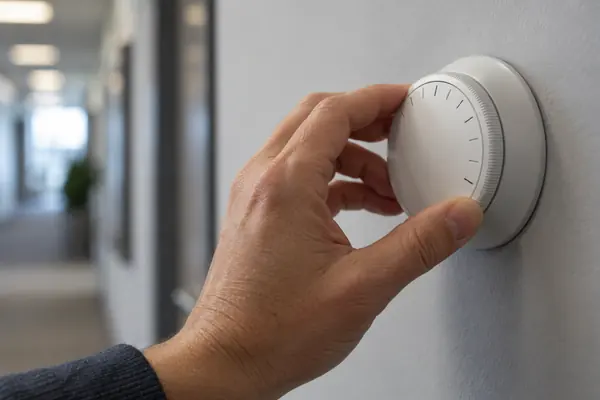
TEMPERATURE
Normally at least 16 °C
HSE says workrooms where people mainly sit should normally be at least 16 °C, or 13 °C where work involves physical effort. There is no set maximum.
Check a question doodleoffice
WHAT THE GUIDANCE SAYS
UK guidance sets a floor for office warmth, but no ceiling.

16 °C normally at least
16 °C Usual minimum for sedentary work
HSE guidance covers temperature, room space, fresh air, water and screen work, and GOV.UK sets out rest breaks. A few of the numbers are firmer than most people think; others are looser.
THE SHORT ANSWER
Some rules are firm duties.
Others are guidance that depends on the work.
TEMPERATURE
HSE says workrooms where people mainly sit should normally be at least 16 °C, or 13 °C where work involves physical effort. There is no set maximum.
Check a questionSPACE
Divide the empty room's volume by the people normally working in it. HSE says the answer should be at least 11 cubic metres.
See the numbersBREAKS
For screen work, HSE says 5 to 10 minutes every hour is better than 20 minutes every 2 hours. Short, frequent breaks beat long, rare ones.
Build in breaksA QUICK OFFICE CHECK
Pick a common office question to see what the guidance says. The bar shows how firm the rule is, from loose guidance to a clear entitlement.
Based on HSE guidance and GOV.UK. This is general information for Great Britain, not legal advice about your contract.
FOUR EVERYDAY HABITS
Much of this is about how the working day is planned. These habits follow HSE and GOV.UK guidance.
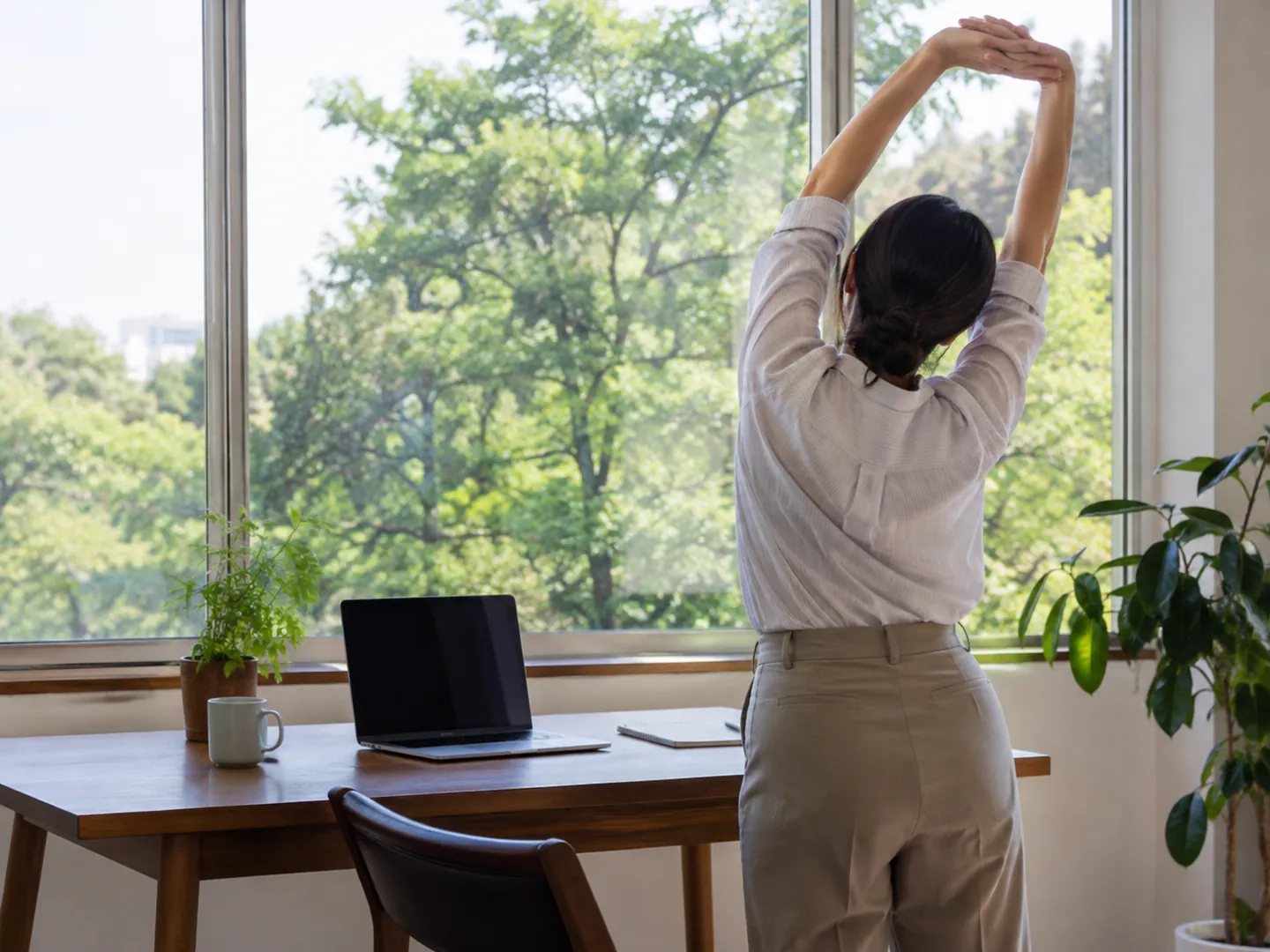
Short breaks often, rather than longer ones less often. Meetings and phone calls count as a change of activity.
HSE says breaks should let you leave the desk and move, or at least stretch and change position.
If you work more than 6 hours a day, you are entitled to one uninterrupted 20-minute rest break.
If you use a screen for work, your employer must arrange and pay for an eye test when you ask.
TWO NUMBERS WORTH KNOWING
One figure on temperature,
one on how much space each person needs.
16 °C
Usual minimum for sedentary work
HSE says that where work is mainly sedentary, as in offices, the temperature should normally be at least 16 °C. For work involving physical effort it should be at least 13 °C.
TEMPERATURE · HSE
11 m³
Minimum room volume per person
HSE's short guide for managers says the empty room's volume divided by the number of people normally working in it should be at least 11 cubic metres, with any height above 3 m counted as 3 m.
ROOM SPACE · HSE
HSE notes that 11 cubic metres is a minimum and may not be enough, depending on the layout of the room, the furniture and the type of work.
WATER, AIR AND REST
HSE's guide says workplaces need adequate ventilation with fresh air drawn from outside, and an adequate supply of high-quality drinking water. Bottled water containers not connected to the mains should be refilled at least daily, unless they are chilled dispensers returned to the supplier.
Rest areas should have enough seats with backrests and tables for the people likely to use them at one time, and eating facilities should include a way to prepare or get a hot drink.
Questions
No. HSE guidance sets no upper limit. It expects a reasonable working temperature, with measures such as fans, ventilation, shading and breaks for cool drinks when it is hot.
HSE says it should normally be at least 16 °C where work is mainly sedentary, or at least 13 °C for work involving physical effort.
At least 11 cubic metres per person, worked out as the empty room's volume divided by the number of people normally working in it, counting height above 3 m as 3 m.
Only if the eye test shows you need special glasses for screen work. If your normal prescription is suitable, the employer does not have to pay for glasses.
Not necessarily. GOV.UK says the 20-minute rest break for days over 6 hours does not have to be paid; it depends on the employment contract.
Updated
ABOUT THIS NAME
doodleoffice.com is part of the DoodleSale portfolio. Check the current listing and available purchase or lease options.